Author: gadgetts

  • Phone addiction signs: what people refuse to give up compared to their phones

    Phone addiction signs: what people refuse to give up compared to their phones

    Do you believe you have a smartphone addiction? It’s unlikely that most of us would want to acknowledge that. Most likely, we believe that we can put our phones down whenever we want. However, a poll by tech recycling specialists Compare and Recycle indicates that more people are looking for indications of phone addiction. Additionally, their poll revealed several intriguing and unsettling items that people would prefer to give up than their smartphones.

    Phone addiction signs

    Smartphone addiction test: licking a sidewalk beats giving up your phone

    Google searches for indicators of phone addiction have increased by a staggering 461% in the last year, according to the report. Similar to this, inquiries about symptoms have increased by 200% in the past month alone. But how dependent are we on our phones? Do you think you might be able to give it?

    The results of a nationwide poll conducted by Compare and Recycle, which asked respondents what they would rather give up than endure a week without their cell phone, are concerning, if rather amusing. Two-fifths of respondents to the study stated that they would prefer to completely give up caffeine than go seven days without using a phone. Nearly 25% would not see anyone for a week. 18% of individuals would stop taking showers, and one in seven would choose to shave off an eyebrow.

    One in fourteen would choose to kiss a public pavement than give up their device, which is even more ridiculous. Gen Z also demonstrated the strongest attachment, according to the report. Instead of going seven days without using their phones, some study respondents indicated they would rather walk over hot coals, jump out of an airplane, or even have a tattoo selected by a stranger.

    Recognizing the warning signs of smartphone addiction

    It’s okay if these poll results make you anxious and wonder if you could be dependent on your phone. This can be the necessary wake-up call for you. If so, you may want to look at your own smartphone usage patterns. According to a 2021 study, Americans check their phones 262 times a day. That is equivalent to once every five and a half minutes.

    Since 2014, the addiction has even been officially linked to an anxiety disease known as “nomophobia.” According to Lee Elliott, Chief Product Officer at Compare and Recycle, we have an entirely unhealthy relationship with our gadgets. On the other hand, Google and Apple platforms offer features to help you monitor how much time you spend on your gadgets. This includes Google’s Digital Wellbeing program, which can assist you in keeping an eye on and controlling how much time you spend on devices.
  • Nvidia develops tracking software to monitor Blackwell AI chip locations

    Nvidia develops tracking software to monitor Blackwell AI chip locations

    Powerful chips, which fuel AI tools, travel across borders and supply lines before arriving at the systems that rely on them. Thus, the industry takes notice when rumors indicate that Nvidia’s latest Blackwell chips are showing up in unexpected locations. Customers, businesses, and governments all want to know where these chips are really going.

    According to recent reports, Nvidia is testing software that can verify the position of a chip, which raises this problem. Nvidia has developed a system that monitors a chip’s performance and connection to Nvidia’s servers, according to Reuters. The location of the chip can be inferred from minute delays or patterns in its telemetry. According to reports, the capability will launch with Blackwell chips and be optional for users.

    Nvidia trials location-verification software

    nvidia ban in china

    This problem was brought to light by two recent events. Blackwell is not included in the carveout that was granted permission to sell some older H200 chips to authorized clients in China. Nvidia believes it is unable to confirm stories that connected China-based models, such as DeepSeek, to Blackwell chips that were smuggled. When combined, these incidents brought up fresh concerns regarding enforcement and distribution.

    In the meanwhile, there are significant incentives for illegal trade due to limitations on particular chip families and the skyrocketing economic value of high-end CPUs. Manufacturers and regulators can use a location-verification tool to verify whether hardware regulations are being adhered to.

    However, the concept operates in a challenging area where user privacy, economic interests, and security coexist. Clear public criteria about data storage, checks, and what happens if a chip emerges in an inappropriate environment are necessary for the system to function and be accepted by Nvidia and its clients.

    Ultimately, control and trust are more important in Nvidia’s testing than surveillance. Advanced AI model chips are simply too valuable to be left unmonitored, and a tool that verifies their usage might prevent smuggling, safeguard consumers, and promote compliance in a market that moves quickly.

  • Russia edges closer to blocking Google as internet regulations tighten

    Russia edges closer to blocking Google as internet regulations tighten

    As it steps up efforts to control the nation’s digital domain, Russia is thinking of completely blocking all Google services. The formal proposal comes after lawmakers issued further cautions. They contend that there may be a national security danger associated with Google’s handling of user data. The likelihood of a total ban keeps growing as hostilities between the government and the tech behemoth worsen.

    Russia considers countrywide ban on Google services

    According to Russian legislator Andrei Svintsov, Google services could be blocked by the government because the country’s citizens’ data is currently being held elsewhere. He contends that Russia and its economy are seriously threatened by the storage of citizens’ data abroad. He goes on to say that it could lead to future penalties and allow foreign monitoring of domestic businesses.

    Svintsov had previously attacked Google-owned sites, speculating that following recent service interruptions, even Google Meet would be banned. He is still in favor of the Russian government’s insistence that international companies keep local residents’ data inside their borders. They are adamantly opposed to user data being stored abroad.

    New restrictions risk deepening digital isolation in the state

    Stricter measures are on the horizon, as evidenced by the presentation of a new bill in the State Duma to reinforce regulations governing the transfer of personal data overseas. The goal, according to the MPs, is to apply a gentle pressure that “encourages” US tech firms to completely withdraw from the Russian market. The nation has already prohibited a number of other well-known websites and applications. To access these platforms, citizens must use VPNs.

    The goal of the Russian government is to improve internal control nationwide. Recently, authorities have imposed restrictions on access to a number of Western platforms, such as Roblox, FaceTime, and Snapchat, on the grounds that they carry extremist content or facilitate dangerous acts. Additionally, a complete ban on WhatsApp was recently threatened. The government’s current course suggests further state control and greater digital isolation.

  • Ventana acquisition helps Qualcomm push RISC-V and power the Snapdragon 8 Elite future

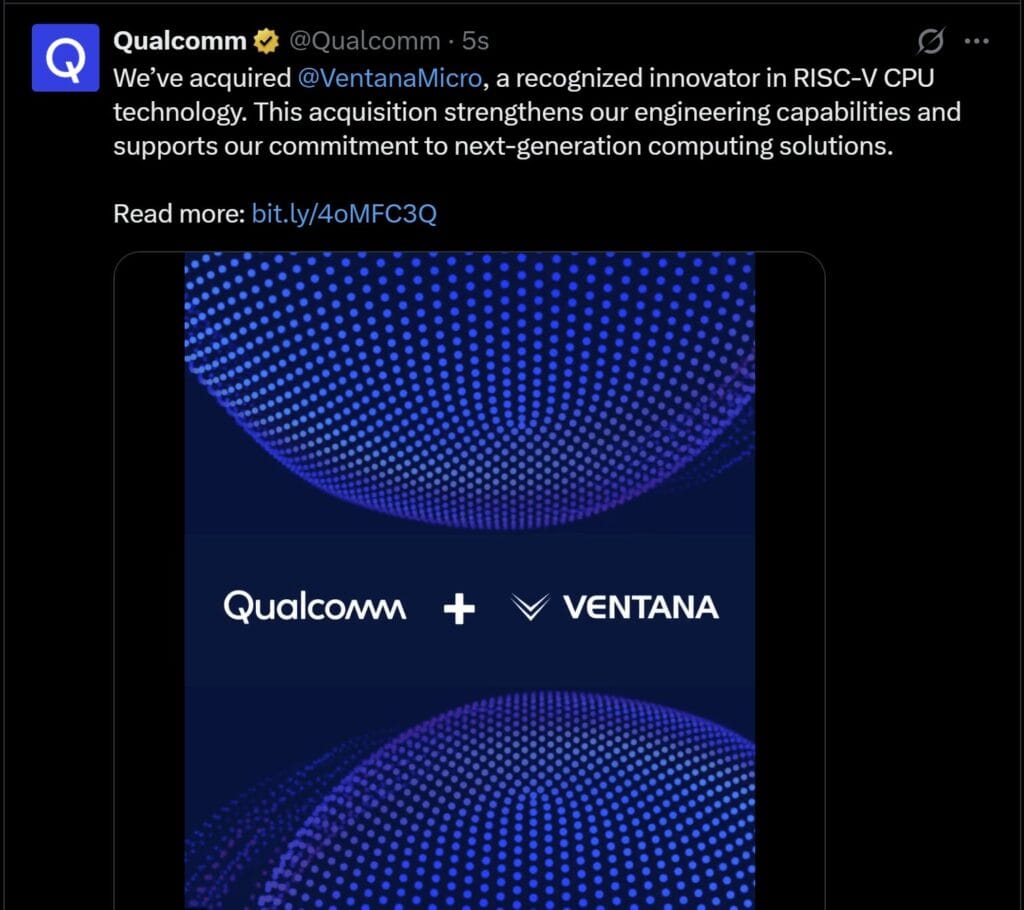
    Today, Qualcomm formally announced the acquisition of Ventana Micro Systems, a calculated move to bolster its next-generation CPU roadmap and increase its RISC-V technology capabilities. Innovation in custom processor platforms like Oryon and next Snapdragon families should be further stimulated by this.

    Qualcomm now has a solid technical base to incorporate RISC-V advances with its current unique CPU architecture thanks to this acquisition. This aims to create more secure, scalable, and power-efficient CPUs for data centers, AI applications, and mobile devices.

    According to Qualcomm, a number of ongoing internal projects, including as the internally created Oryon CPU series, will be directly supported by Ventana’s RISC-V expertise. Qualcomm is attempting to increase instruction-level efficiency and lower power consumption across future platforms by fusing the open and modular design of RISC-V with the performance-focused engineering of Oryon. This would facilitate multi-year development for enterprise-level AI applications, edge computing devices, and smartphones.

    Key strategic benefits include:

    • Better integration between RISC-V and proprietary CPU designs
    • Improved low-power and high-performance computing capabilities
    • Faster mobile and AI-focused silicon innovation cycles
    qualcomm snapdragon acquires Ventana

    What this means for Snapdragon flagship devices

    Xiaomi’s premium device ecosystem will be directly impacted by this acquisition, particularly in models that use Qualcomm’s high-end chipsets. The ongoing Oryon development strategy is tightly linked to the Snapdragon 8 Elite, which powers advanced platforms.

    Future Xiaomi products, such as the Xiaomi 15 series and an anticipated Xiaomi 17 series, will follow this architectural progression. These can result in more consistent gaming and multitasking experiences, enhanced AI processing, and greater sustained performance. These CPU-level improvements are also anticipated to help devices with the POCO F7 Ultra and upcoming POCO F8 Ultra, which rely on flagship platforms from China that have been modified for the international market.

    Expected benefits for the Xiaomi smartphones include:

    • Higher sustained performance under heavy workloads
    • Improved battery efficiency in AI and gaming scenarios
    • More consistent thermals for flagship-class devices

    How Ventana is driving the next wave of RISC-V innovation

    With its headquarters located in Cupertino, Ventana Micro Systems was established in 2018. It focuses on creating safe, scalable, high-performance chiplet solutions built on the RISC-V open architecture. By participating in RISC-V International’s several technical steering groups, the company actively contributes to the development of industry-wide standards.

    RISC-V has a lot of potential to spur additional innovation in future CPUs, according to Durga Malladi, Executive Vice President and General Manager for Technology Planning, Edge Solutions, and Data Center Business at Qualcomm. Ventana CEO Balaji Baktha promised that the team would now collaborate closely with Qualcomm, incorporating its knowledge into Oryon-based systems aimed at advances in low-power, high-performance computing for next consumer and business devices.

  • Android 16 arrives on Samsung phones with the new One UI 8.5 update

    Android 16 arrives on Samsung phones with the new One UI 8.5 update

    A significant update based on Android 16 was just released by Samsung for some Galaxy handsets. However, what is actually contained in this unexpected year-end update? These are all the exciting new features and improvements you can anticipate.

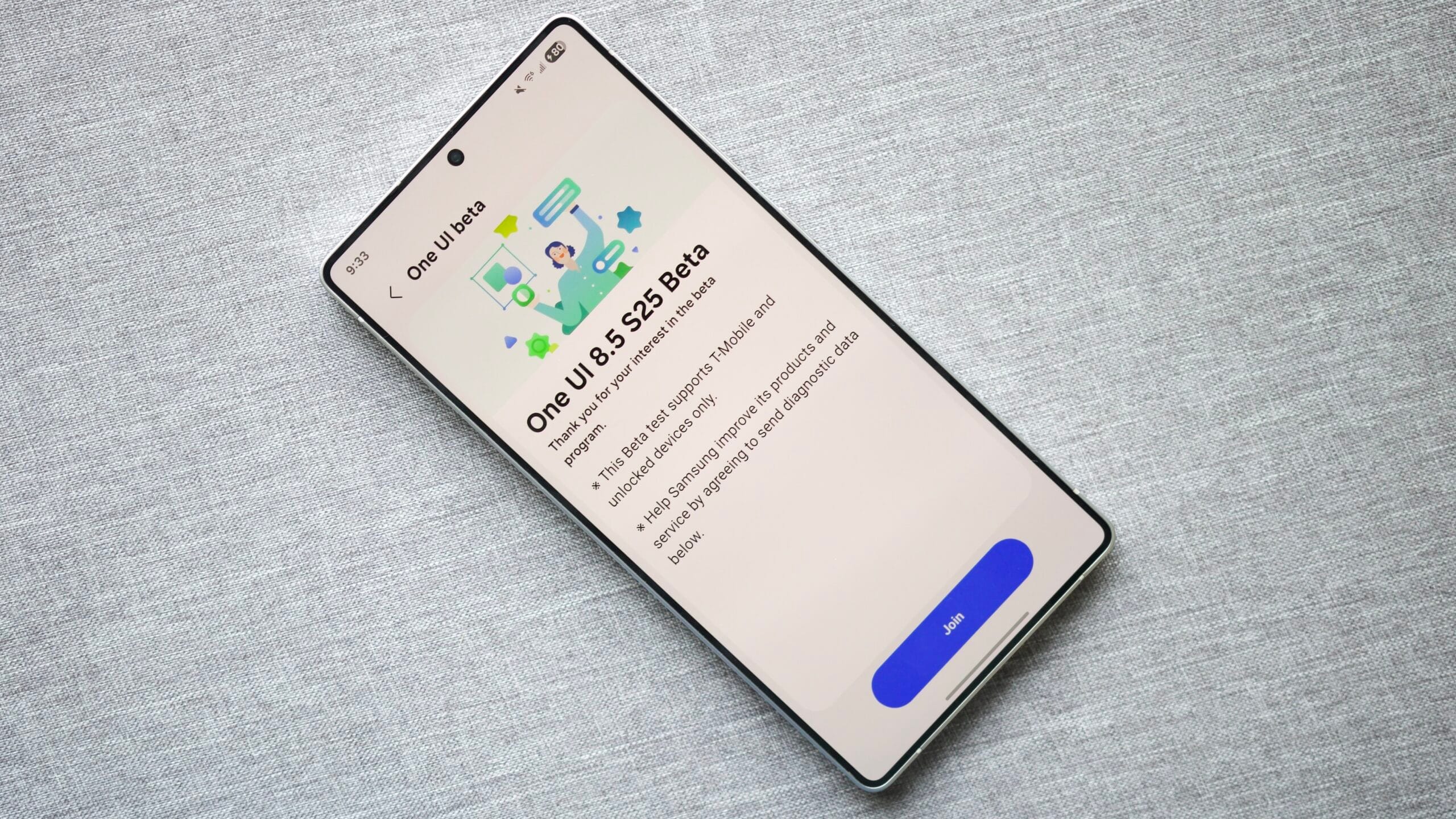
    The frequency of Samsung’s software updates is rapidly increasing. The South Korean company has now launched the One UI 8.5 beta program, which is likewise based on Google’s release of Android 16 QPR2 for Pixel phones. The program now lists the Galaxy devices that can test the software, but the most of the major features were previously disclosed.

    Which devices got One UI 8.5?

    samsung one ui 8.5 - phone in hand

    Samsung declared in an official press release that One UI 8.5 is compatible with the Galaxy S25, S25 Plus, and S25 Ultra; however, the S25 Edge is not part of the beta. Enrollment is restricted to a few areas; in the US, Germany, India, South Korea, Poland, and the UK, access is available via the Samsung Members app.

    Through the app, users in those nations with compatible smartphones can sign up for the beta test. However, like with the introduction of One UI 8, participation is not guaranteed everywhere because spots may be limited.

    Although the list is anticipated to be identical to that of the prior beta, Samsung has not yet disclosed which further Galaxy handsets would be qualified.

    One UI 8.5 got some AI

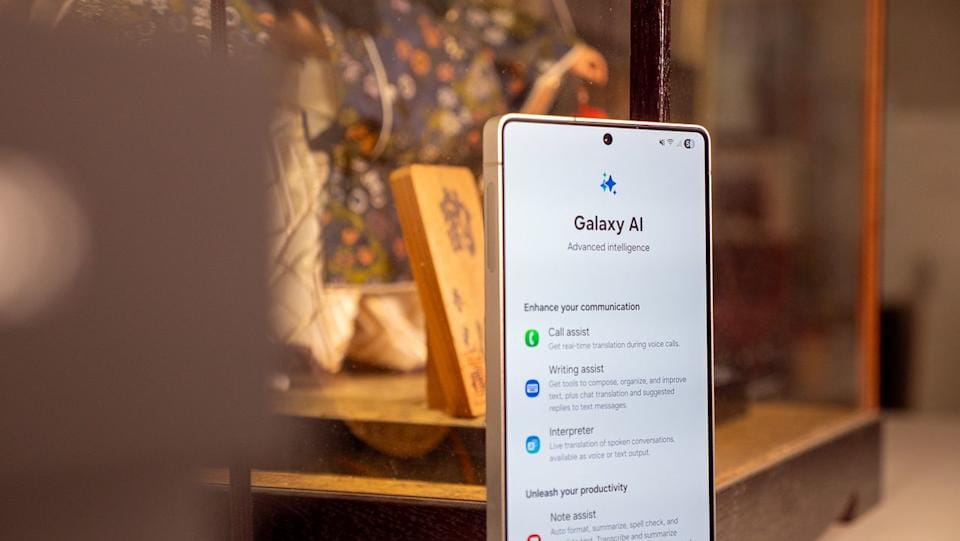
    It seems that the features and modifications that were leaked last week are correct. The AI department has seen some significant improvements. Unlimited image creation, edit history, and ongoing edits are now supported by Photo Assist. Quick Share is now more intelligent, recommending contacts found in images for simpler sharing. While Social Composer may automatically create descriptions based on photos before sharing, Meeting Assistant offers real-time translation.

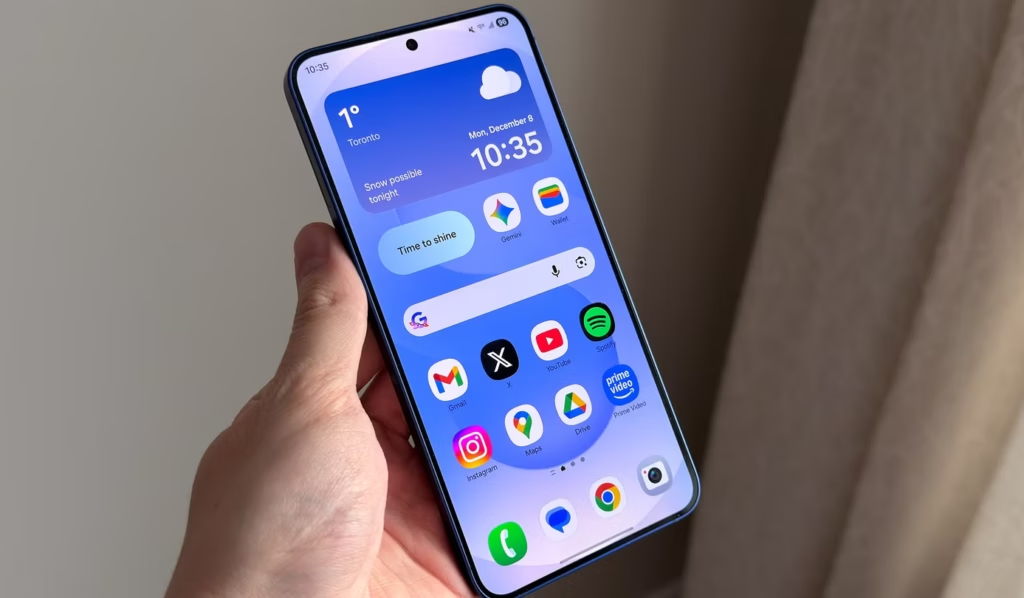
    Additionally, Samsung has kept improving the user interface. In version 8.5, lock screen wallpapers are more dynamic and better adjust to other elements, and Quick Settings now has cleaner toggles for widgets and shortcuts. Security and privacy controls have also been simplified, with a more straightforward permission manager and simpler access to settings.

    Samsung has incorporated some of Google’s built-in capabilities, such as Auracast broadcast support with LE-enabled headphones and speakers, because the update is based on Android 16 QPR2. The business might also offer expanded dark mode and redesigned app icons.

  • More Xiaomi devices receive HyperOS 3 powered by Android 16

    More Xiaomi devices receive HyperOS 3 powered by Android 16

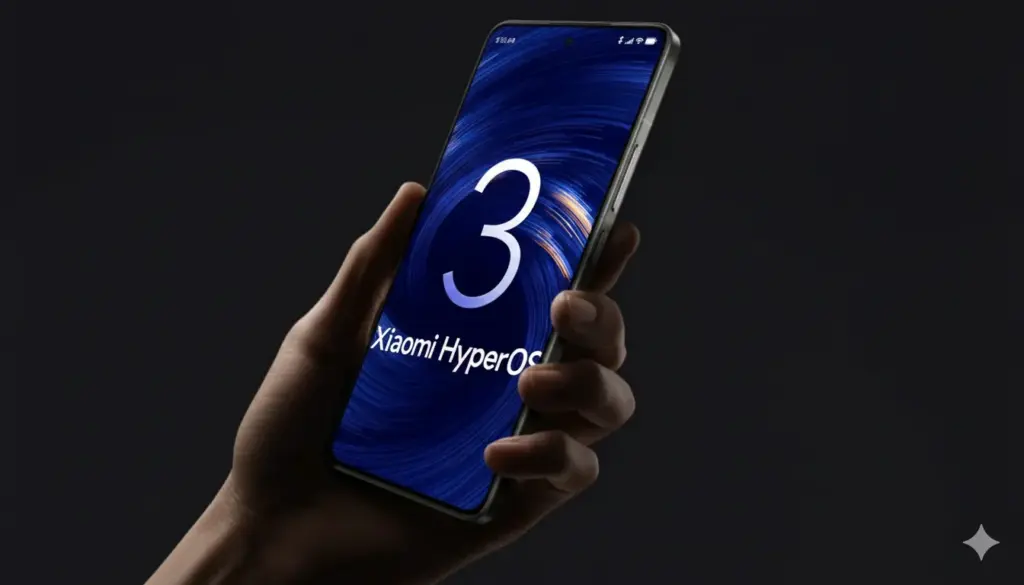
    With HyperOS 3.0, Xiaomi is intensifying its efforts to offer Android 16. At last, older Xiaomi smartphone models are catching up. Is this the company’s most ambitious Android update cycle to date?

    It is difficult to bring significant Android updates to the front row given Xiaomi’s extensive selection of Android devices. Android 16’s pace has improved somewhat since its skinned HyperOS 3 was released on a few models in August and September, with the global release scheduled for October. With more phones, especially older models, receiving a taste of fresh Android software, the business has now taken a bigger step before the year ends.

    HyperOS 3 update with Android 16

    More Xiaomi Devices Get Android 16

    Xiaomi just released HyperOS 3.0 on a number of smartphones in its own country. Among them are popular mid-range devices such as the Redmi Note 13 Pro (Plus), Redmi Note 14 Pro (Plus), and Redmi Note 15 Pro (Plus). It is strange that the Redmi Note 15 Pro was not included in the initial batch, given they were released in 2023, 2024, and 2025, respectively.

    The Xiaomi 13 series, which includes the 13 Pro and 13 Ultra (review), is also covered in the release. The 13 Ultra was released a few months after the previous two, which made their premiere in the end of 2022. What does this imply for phones that are sold outside of China, then?

    android 16 HyperOS 3 phone in hand

    What Makes HyperOS 3.0 Worth the Wait?

    With multiple UI modifications, HyperOS 3.0 is a more exciting version than HyperOS 2.0. App icons and system text, as well as the home screen and quick settings, all have a more contemporary and tidy appearance. AI wallpapers and new styling are also added to the lock screen. The Super Island, which displays dynamic and live widgets using the notch, is a more noteworthy visual innovation.

  • Google releases Android 16 QPR2, introducing 3 notable new features

    Google releases Android 16 QPR2, introducing 3 notable new features

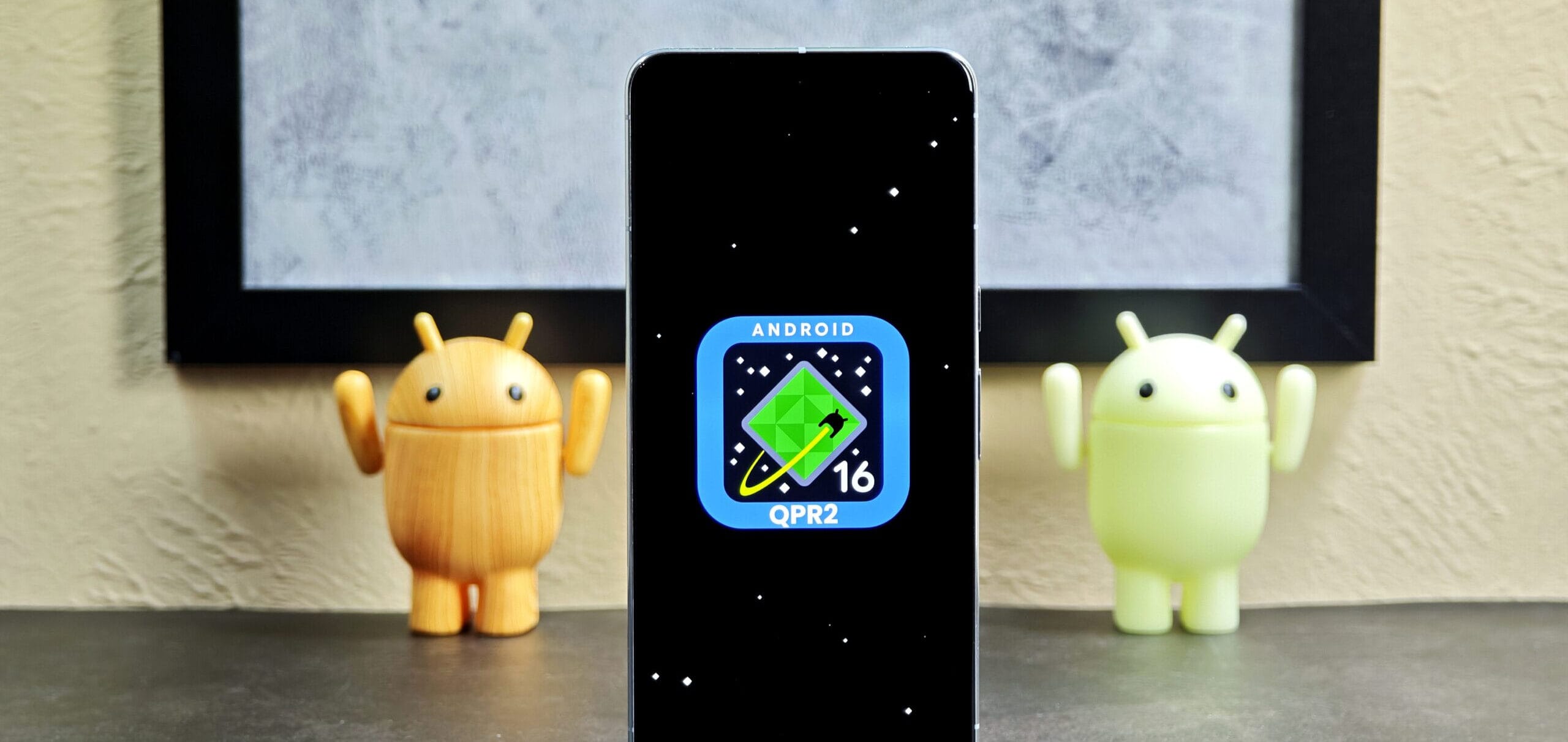
    Your phone may be ready for an update as Google is releasing its Android 16 Quarterly Platform Release (QPR) 2.

    Numerous new features that should enhance performance, usability, and other aspects are included in the Android 16 QPR2 release. Check out these three new features.

    Lockscreen widgets

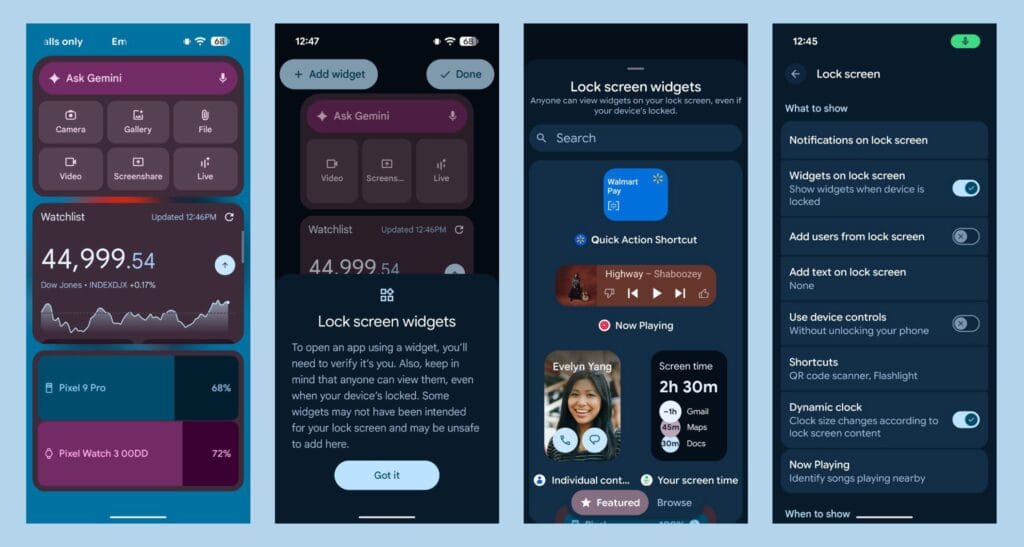
    With the latest version of Android 16 QPR2, you can add widgets that show up when you swipe left on your lock screen. 9to5Google according to Google, you may activate the functionality by going to “Settings > Display & touch > Lock screen > Widgets on lock screen.” This implies that you will have easy access to your camera, calendar, and other devices.

    Android 16 QPR2 lockscreen widgets

    Manage alerts with notification organizers and smart summaries

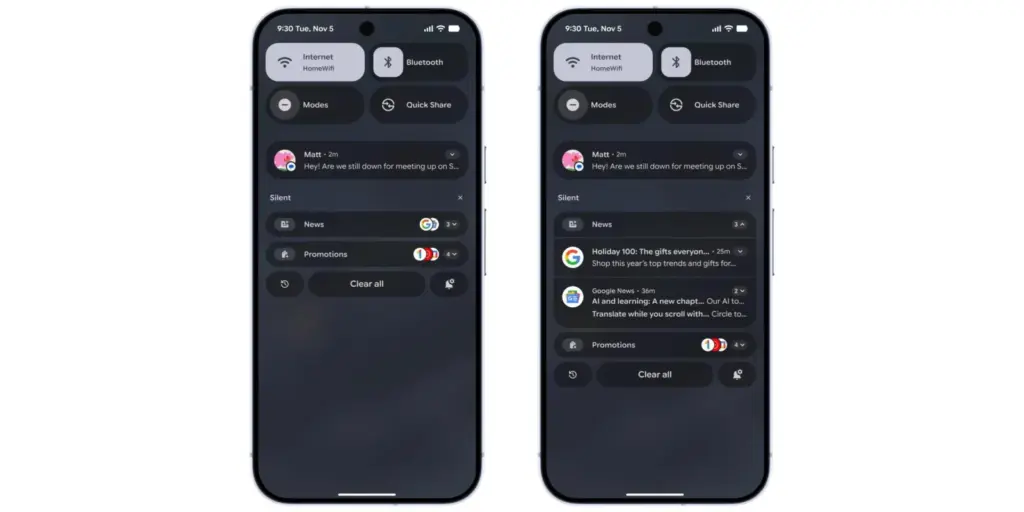
    We all get overloaded with notifications, so pay attention. Android 16 QPR2 claims to use AI to control those annoying alerts. A lengthy message in a group chat, for example, will be summarized by the upgraded software, which will also automatically prioritize more significant notifications.

    “Your lower-priority notifications (including news, promotions, and social alerts) are automatically grouped and silenced by Notification Organizer, which helps you focus on what really matters with fewer distractions. The notification organizer will be accessible in the upcoming weeks and is being released in phases, according to Google.

    Improved parental controls

    With Android 16 QPR2, parents may monitor their children’s devices from a single spot thanks to the “parental controls” option in settings. It will enable parents to regulate app usage, set screen time limits remotely, and schedule when a child’s device locks.

  • Global debut for the Redmi Note 15 series as sales kick off next week

    Global debut for the Redmi Note 15 series as sales kick off next week

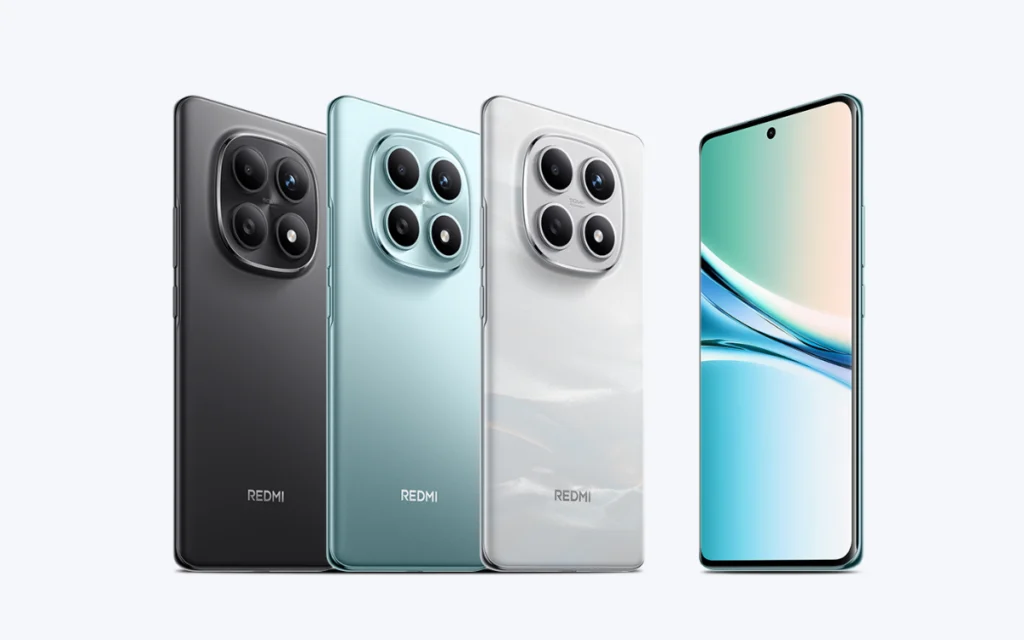
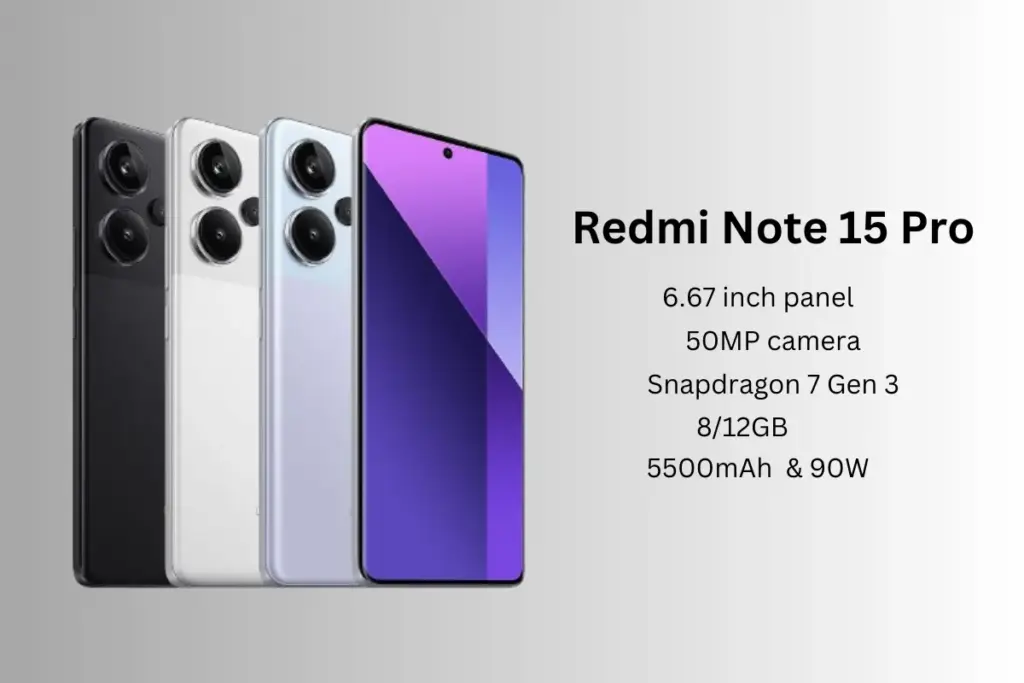
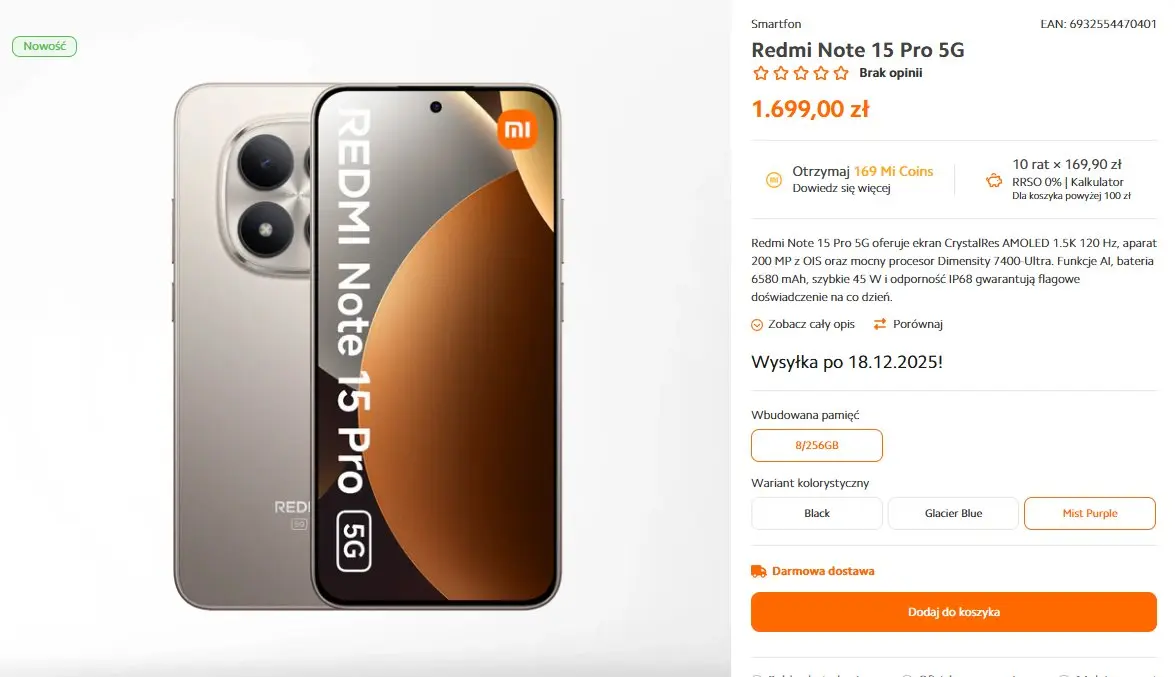
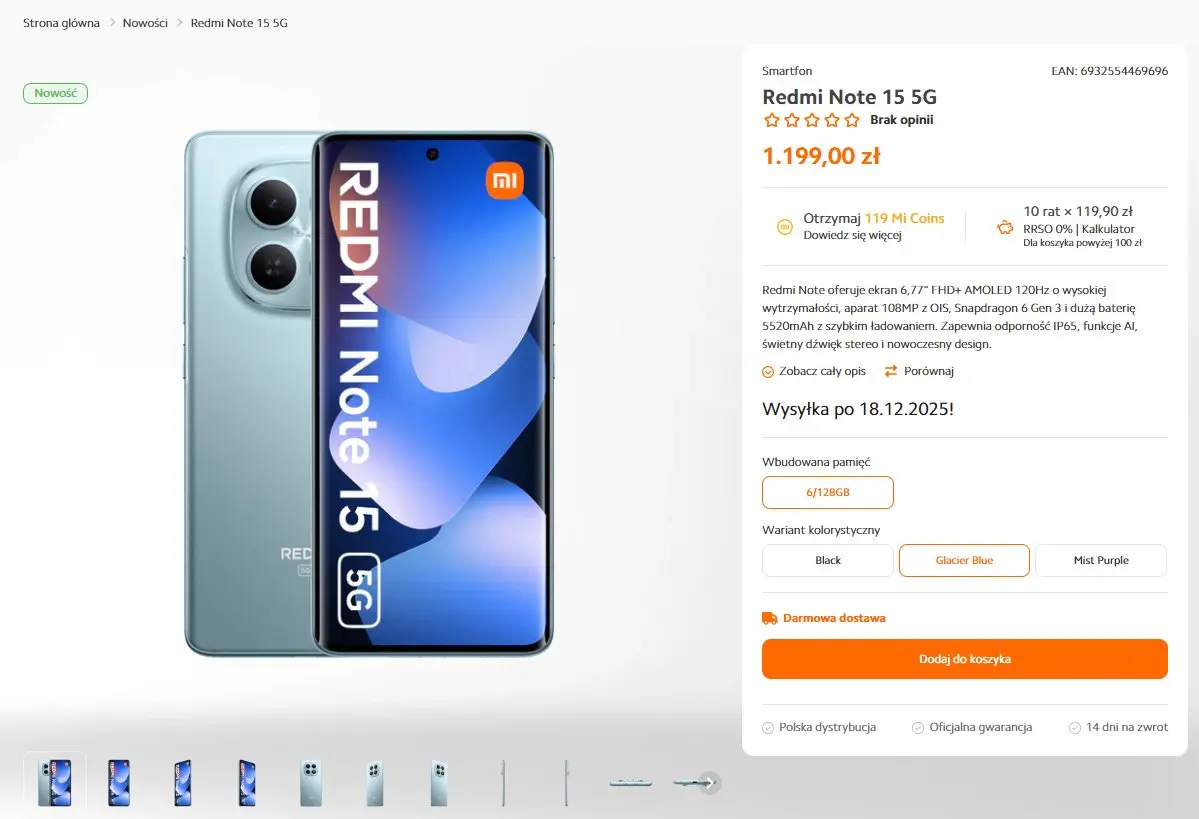
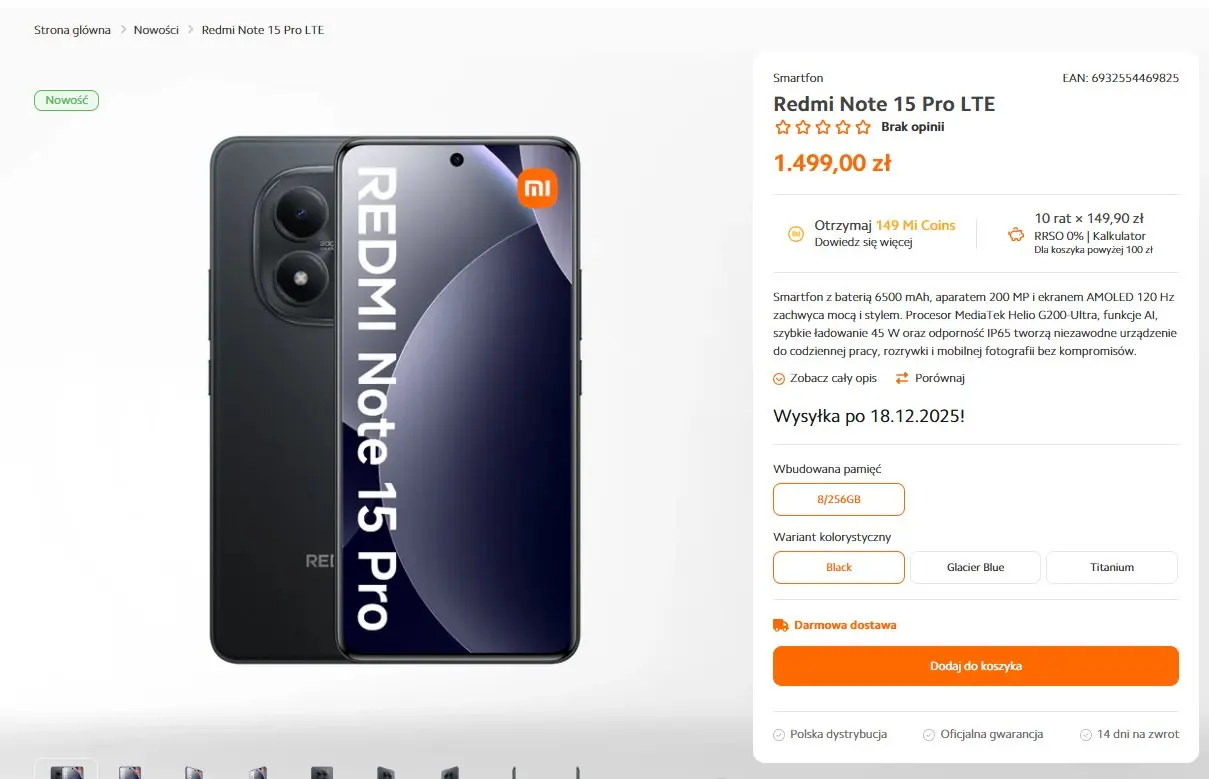
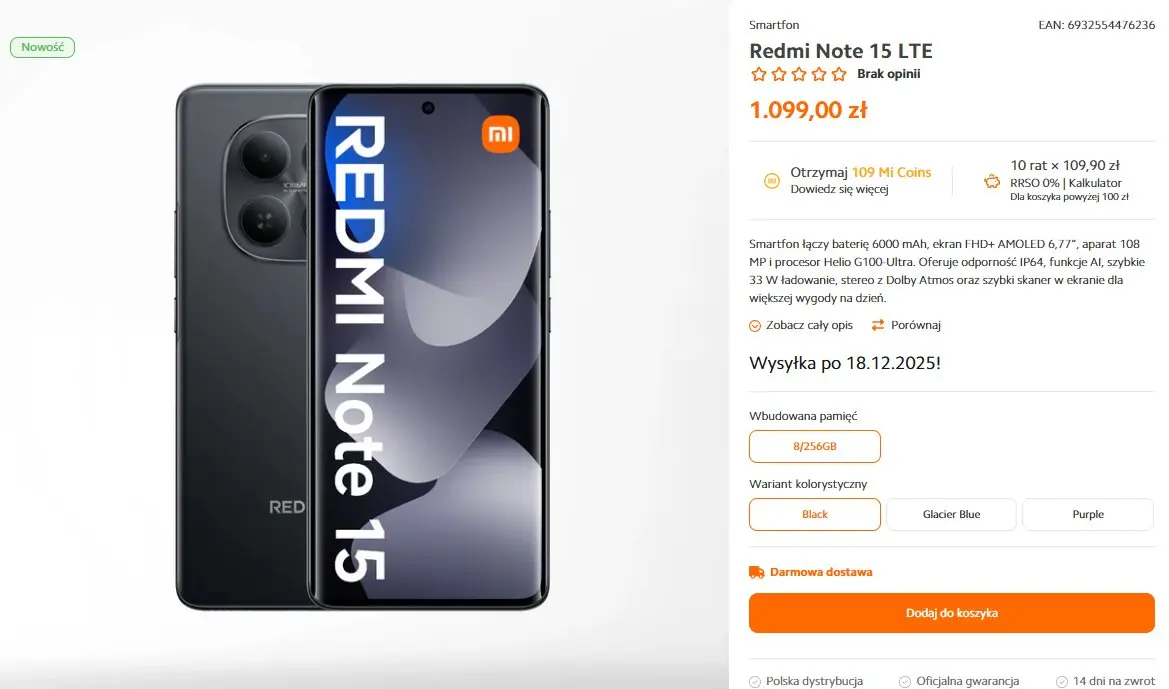
    Beginning with an unexpected soft launch in Poland, the Redmi Note 15 series has been formally released to international markets. This new selection advances Xiaomi’s objective of bolstering its mid-range portfolio by bringing significant improvements in display quality, battery life, and camera capabilities. The series’ models, which debuted in China in August of last year, are now available to consumers worldwide with competitive price and a refined feature set.

    Redmi Note 15 series

    Pricing and availability

    Both LTE and 5G models of the Redmi Note 15 family will be available in Poland, and shipping will start in a week. This makes it one of the series’ first international releases this season. The prices shown below have been converted to USD for better comparison, however bear in mind that they are local Polish listings:

    ModelPoland PriceApprox. USD
    Redmi Note 15 LTE1,099 PLN~$290
    Redmi Note 15 5G1,199 PLN~$315
    Redmi Note 15 Pro LTE1,499 PLN~$395
    Redmi Note 15 Pro 5G1,699 PLN~$445
    Redmi Note 15 Pro+ 5G (8/256 GB)1,999 PLN~$520
    Redmi Note 15 Pro+ 5G (12/256 GB)2,299 PLN~$600

    For buyers seeking a robust media performance and extended battery life without going above flagship costs, the Redmi Note 15 series’ pricing puts it in a balanced position.

    Specs

    The Redmi Note 15 lineup’s chipset options are further divided by the various connectivity configurations. To maximize thermal stability and performance efficiency, Xiaomi keeps dividing its LTE and 5G models along CPU family lines.

    A thorough comparison of the four primary models can be found below:

    FeatureRedmi Note 15 LTERedmi Note 15 5GRedmi Note 15 Pro LTERedmi Note 15 Pro 5G
    ProcessorHelio G100-UltraSnapdragon 6 Gen 3Helio G200-UltraDimensity 7400-Ultra
    Main Camera108 MP108 MP (OIS)200 MP200 MP (OIS)
    Battery6000 mAh5520 mAh6500 mAh6580 mAh
    Charging33WFast Charging45W45W
    Display6.77″ FHD+ AMOLED6.77″ FHD+ AMOLED 120HzAMOLED 120Hz1.5K CrystalRes AMOLED 120Hz
    IP RatingIP64IP65IP65IP68

    Starting with the Pro 5G model’s 1.5K CrystalRes AMOLED panel, it significantly improves display and camera capability. Additionally, compared to earlier Redmi Note generations, there is more pixel density and improved color accuracy. Simultaneously, the Pro models’ 200 MP OIS cameras provide smoother video capture and improved quality in night pictures.

    With lineups ranging from 5520 mAh to 6580 mAh for prolonged everyday use, Xiaomi maintains its battery-focused strategy. The Pro versions strike a solid mix between battery health and recharging speed with their 45W rapid charging.

    Xiaomi’s consistent progress into the mid-range market is embodied in the new Redmi Note 15 series. The series is expected to generate a lot of attention worldwide, especially through channels like Google Discover and local online merchants, thanks to its enhanced screens, large batteries, and potent high-resolution cameras. These are expected to be among the most feature-rich and accessible in their class when shipments begin next week.

  • POCO F6 Pro receives HyperOS 3 with Android 16 and Super Island

    POCO F6 Pro receives HyperOS 3 with Android 16 and Super Island

    With the official release of the HyperOS 3 upgrade for the POCO F6 Pro, which is based on Android 16, Xiaomi’s worldwide flagship platform has undergone a significant software evolution. Smoother visual interactions, AI-level system enhancements, and performance stability for demanding users are the main goals of this update. The upgrade, which is presently accessible via the official Recovery ROM channel, validates Xiaomi’s long-term software plan for high-end POCO devices.

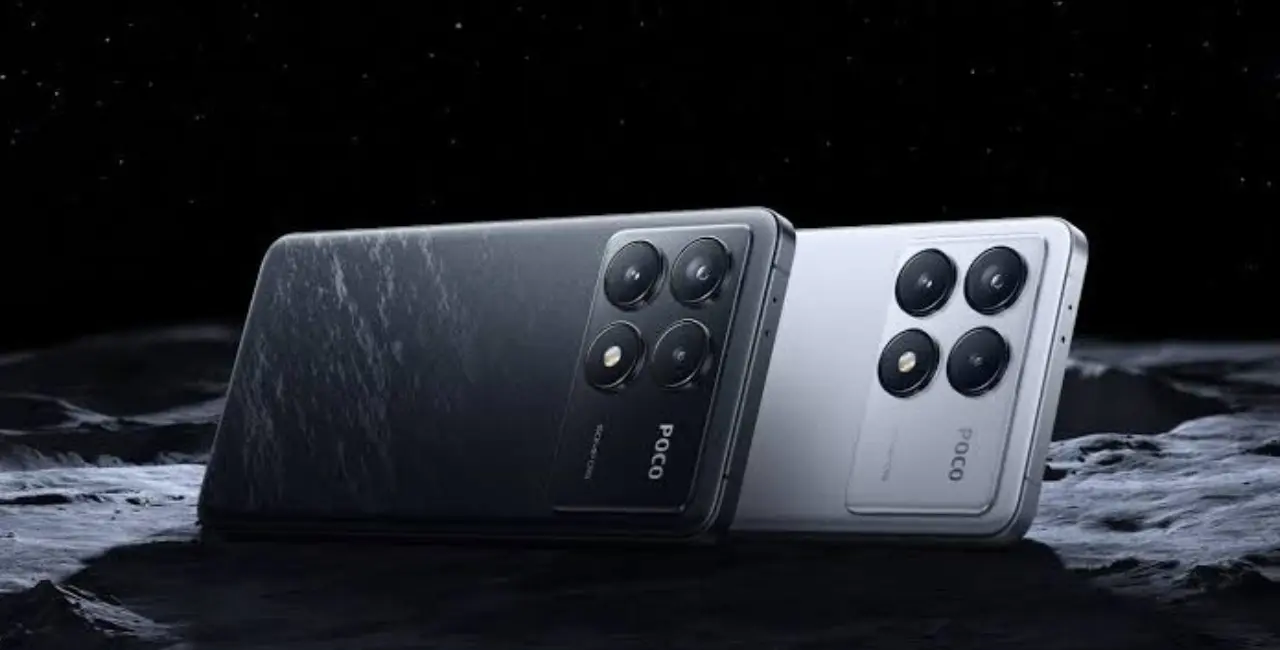
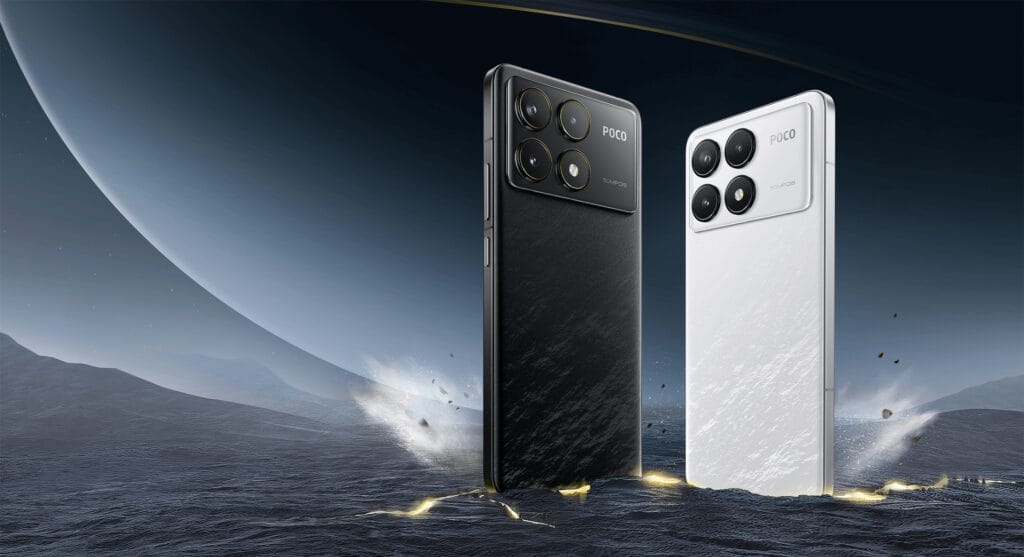
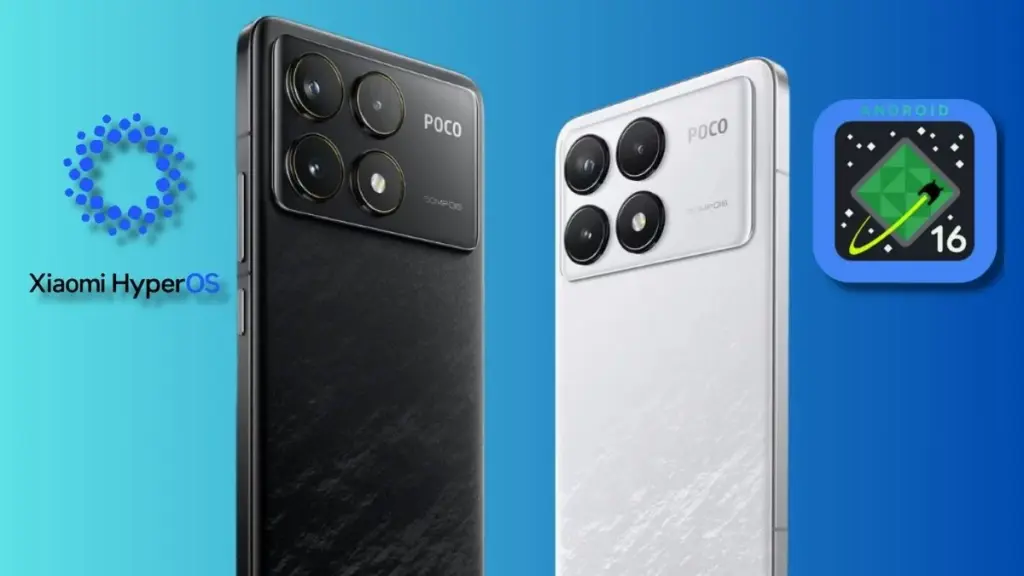
    Poco F6 Pro receives HyperOS 3 based on Android 16

    For the worldwide version of the device, which is internally connected to the Redmi K70 platform, a new firmware known as OS3.0.4.0.WNKMIXM has been made available. According to the update, POCO’s flagship lineup is in line with Xiaomi’s most recent system design and long-term Android policy. In everyday usage scenarios, such as gaming, multitasking, and professional workloads, HyperOS 3 is designed to provide more responsive animations, lower power consumption, and stronger system-level intelligence.

    Tech details

    The update strengthens system stability and modernizes the user interface while keeping a consistent business-grade experience.

    • Device codename: vermeer_global
    • Base system: Android 16
    • Build number: OS3.0.4.0.WNKMIXM
    • Distribution type: Recovery ROM
    • Region: Global (POCO F6 Pro / Redmi K70 platform)

    What is new?

    A more organized and effective visual language that prioritizes practical usability over ostentatious visual elements is introduced in HyperOS 3. While maintaining Android’s flexibility, Xiaomi has improved program icons, created a better notification hierarchy, and introduced a more seamless version of the iOS-style interaction experience. Super Island is a new feature that improves multitasking by enhancing the behavior of mini-widgets, background processes, and floating windows throughout the system.

    Main updates

    Users receive a balanced combination of performance, visual, and AI-level upgrades:

    • Advanced AI system optimizations for background tasks
    • Refreshed system icons with better visual clarity
    • iOS-style visual flow with improved gesture animations
    • Super Island for smarter floating windows and task continuity
    • Enhanced battery efficiency under heavy usage
    POCO F6 Pro update android 16 and hyperos 3

    Currently available through Recovery ROM, the HyperOS 3 upgrade is designed for POCO F6 Pro devices worldwide. By releasing this build in stages to guarantee long-term dependability, Xiaomi continues to uphold regional stability. Users are urged to stay away from unofficial downloads and adhere to Xiaomi’s official update policy.

  • Huawei Mate 80 Pro Max debuts with impressive new innovations – review

    Huawei Mate 80 Pro Max debuts with impressive new innovations – review

    Thanks to some of its most cutting-edge features, the Huawei Mate 80 Pro Max is one of the greatest flagship smartphones of 2025. No, we’re talking about the unique features that are worth your consideration rather than the ultimate specs!

    Huawei Mate 80 Pro Max

    €980
    4.7 out of 5
    The Mate 80 Pro Max is a game-changer in the Huawei smartphone portfolio, not just a name change. The business has made an effort to address every shortcoming of the previous Mate phones with the new model.
    Design 4.8 out of 5
    Performance 4 out of 5
    Display 5 out of 5
    Connectivity 5 out of 5
    Camera 4.9 out of 5
    ✓ The Good nice design new tech used HarmanyOS performs very good
    ✗ The Bad no Google Play services not available in US

    With the Mate 80 Pro Max and its state-of-the-art features, Huawei has addressed every issue, including performance and photography. Let’s examine each of these attributes of the new flagship in greater detail.

    Design: the best look!

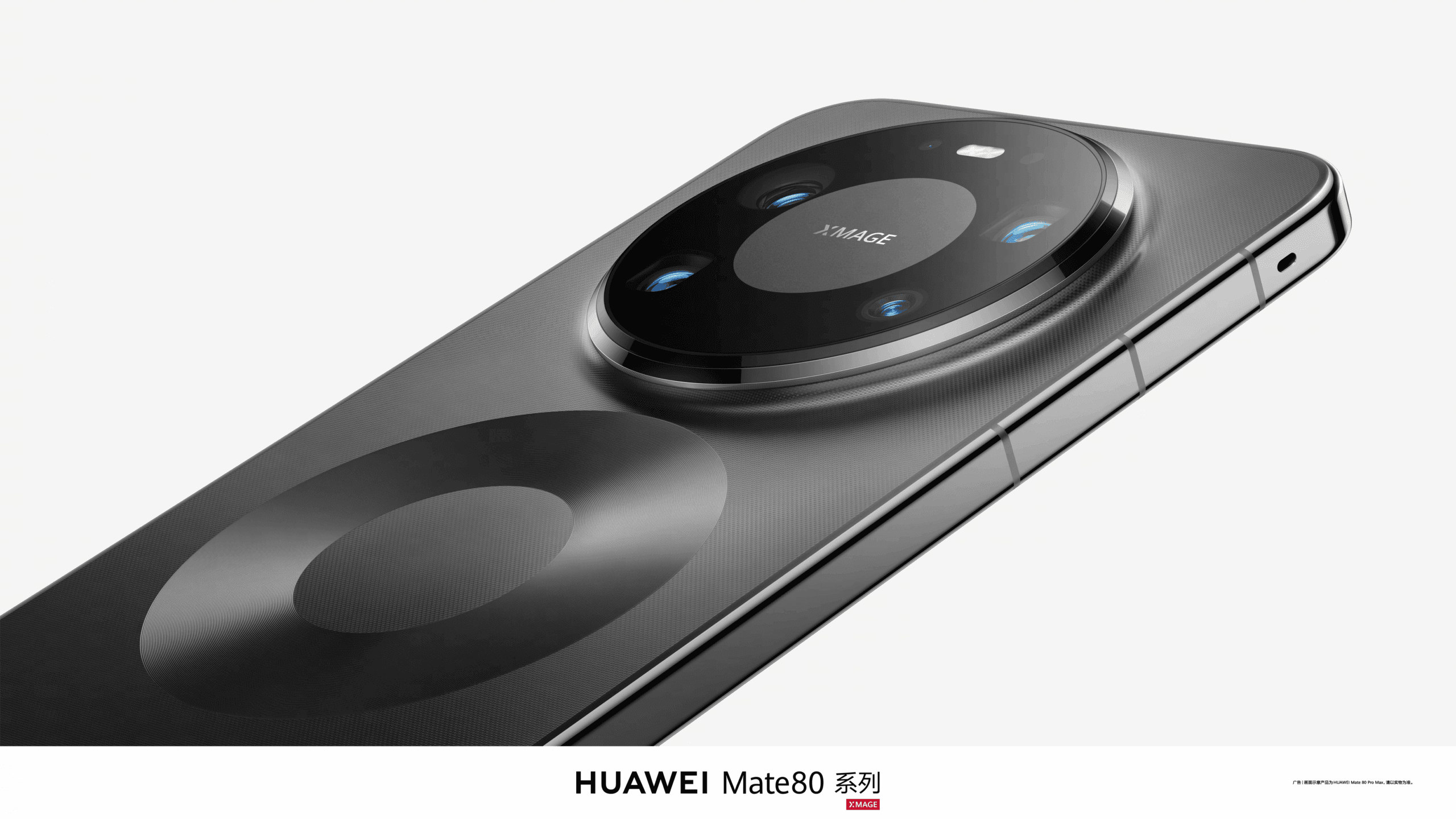
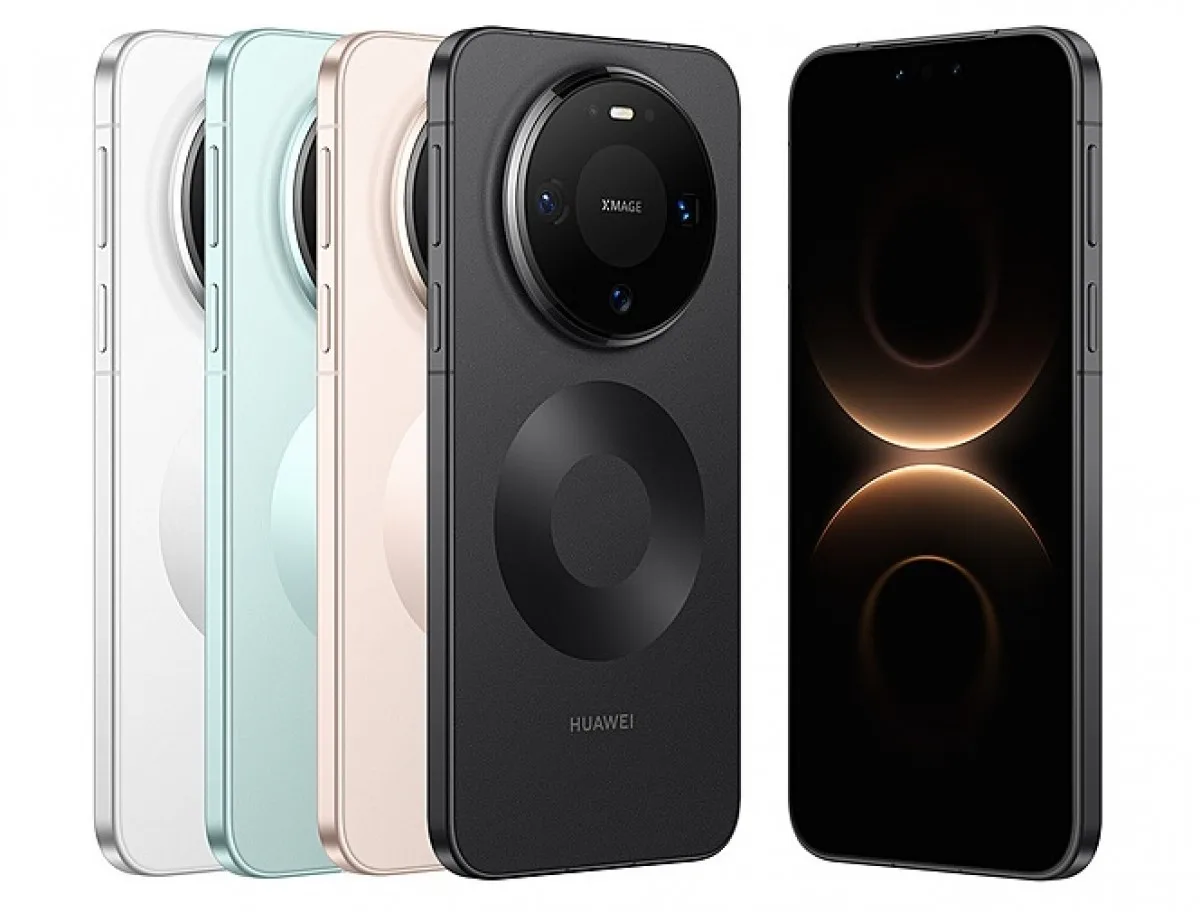
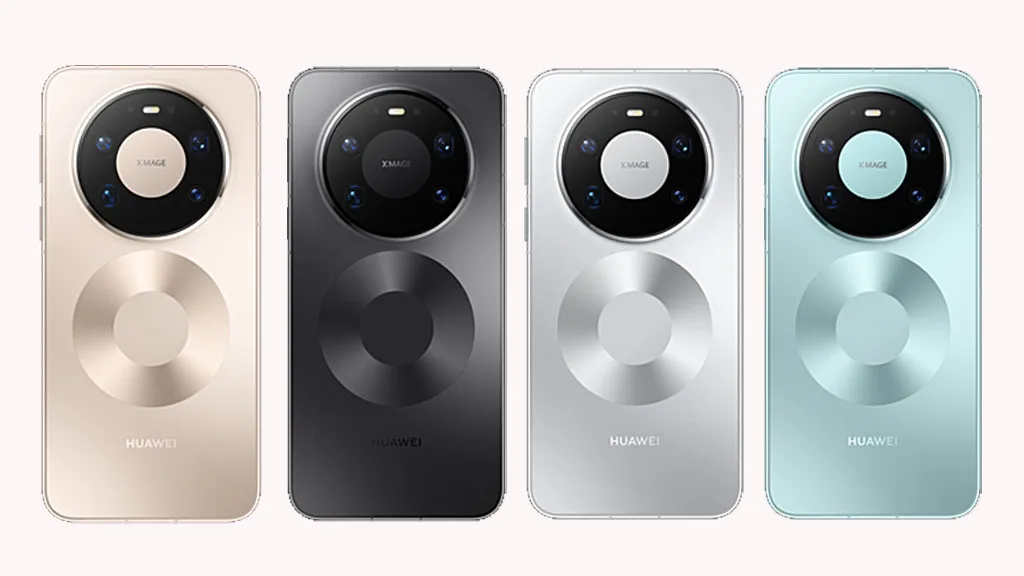
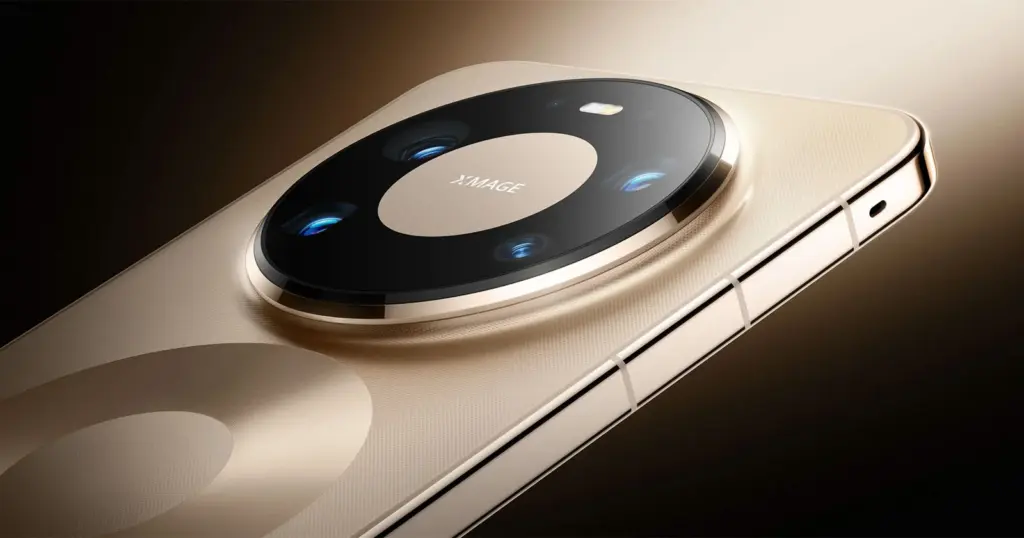
    Mate 80 Pro Max colors and design

    Are you tired of the same old circle camera design on the back? The Mate 80 Pro Max has an infinite appearance because the manufacturer recognizes your feelings.

    This specific design strategy alludes to the new smartphone’s limitless, remarkable features. In order to highlight the device’s name and make it seem more auspicious, it also reflects the number “8.” It’s amazing how MATE is integrated into the lens architecture.

    In the meantime, your smartphone’s all-metal body guarantees that it will be safe and secure throughout its life, regardless of any drops, water falls, or scratches.

    Screen: Brightness like never before

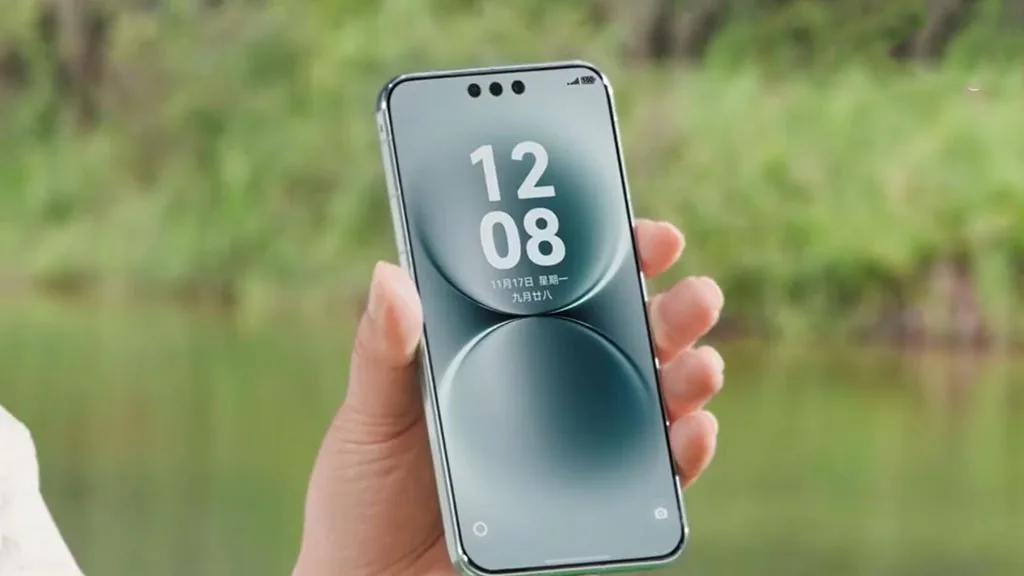
    Huawei Mate 80 Pro Max screen

    The screen of the Mate 80 Pro Max is the result of some unique work by Huawei. In contrast to previous Mate phones, the 2025 model has a dual-layer OLED panel that lowers battery usage while also increasing brightness.

    What’s unique, though? This time, it’s the maximum brightness, which is 8000 nits. The Mate 80 Pro Max is the first phone with this level of brightness, outperforming the iPhone 17 Pro Max and Galaxy S25 Ultra and establishing a new standard for premium models in 2026.

    When watching videos or playing games, the screen eventually stays clear even in direct sunshine, and the content’s colors are crisp and vibrant.

    Celia AI – the AI assistant

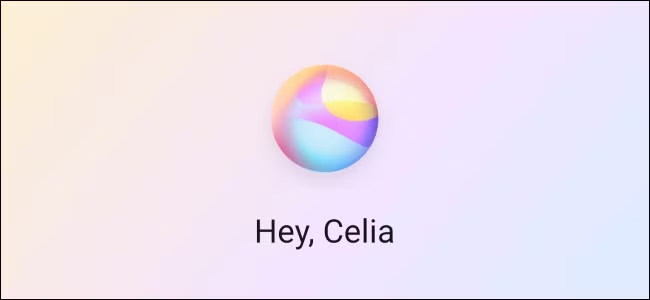
    Huawei joined the smartphone market with its Celia AI assistant, competing with Gemini and Siri. It is now a human friend with certain dynamic capabilities rather than an artificial intelligence model.

    With just a single utterance, you can now use Celia’s AI assistant to order new products, place restaurant orders, book flights, and perform a number of other tasks.

    Tell Celia, for example, if you want to order an outfit or something to eat while playing your favorite game. Additionally, it will take you straight to the payment stage. You can complete the transaction without exiting the game, so don’t worry. Additionally, the app will use your voice to verify the payment.

    Connectivity: weak signals become a thing of the past

    With antenna breaks on all four sides of the frame (the phone’s rear panel), this would likely be the first gadget. What does that signify? The device will provide seamless communication regardless of how you handle it.

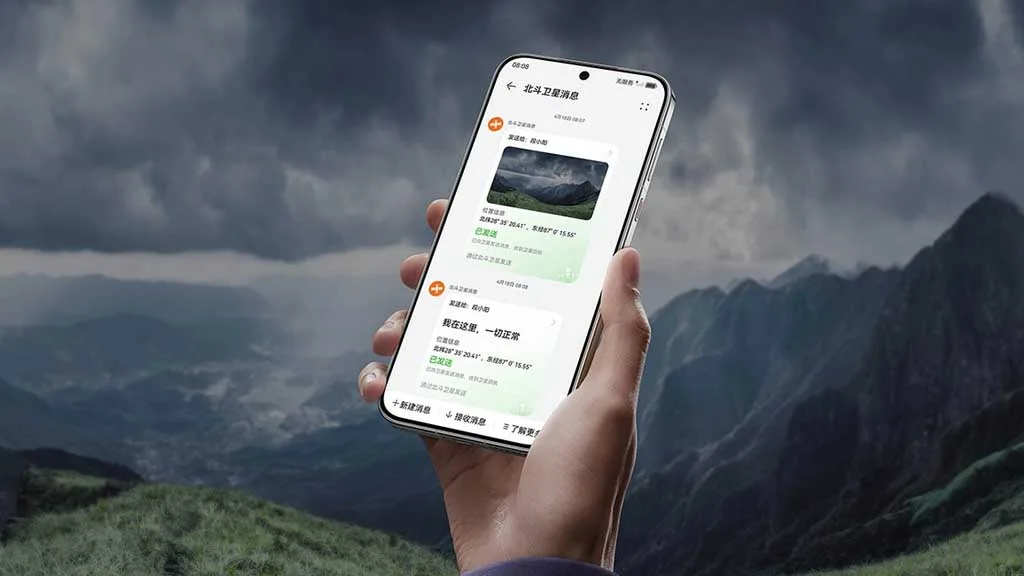
    Apps like Beijing Metro Line 10, which gained popularity because to its poor signal, now offer lag-free, uninterrupted video playback. Users may even monitor the weather without internet access thanks to dual-satellite connectivity.

    Three barriers can be penetrated and 13 kilometers can be covered via 700MHz wireless communication. As a result, you can communicate with other users even in places where there is absolutely no service.

    With its outdoor mode, the Huawei Mate 80 Pro Max’s battery lasts for 14 days. Hiking tracks for some well-known routes can be recorded, imported, or even downloaded with its assistance. Additionally, you identify the rising trend and indicate risk appropriately.

    Camera – top tier

    Huawei Mate 80 Pro Max camera

    Mate phones are not so much imaging devices as they are performance-based ones. However, Huawei has perverted this theory this time. With five potent sensors, including the second-generation multispectral lens, the Mate 80 Pro Max boasts an amazing camera package.

    The gadget features a 50MP ultra-high dynamic primary camera, a 40MP ultrawide angle camera, a 50MP super-focus macro telephoto lens, a 50MP super telephoto sensor, and an improved multispectral lens for legendary image and video capture.

    The new multispectral camera increases color reproduction accuracy by 43% when paired with the 9th-generation ISP. They are more colorful than ever, regardless of whether the photo needs to be taken underwater, in strong light, or in a gloomy environment.

    Thus, these are the incredible qualities of the Huawei Mate 80 Pro Max that truly need your consideration. To improve the overall user experience, additional features include 5A Speed and smart grip.