Tag: qualcomm

  • Ventana acquisition helps Qualcomm push RISC-V and power the Snapdragon 8 Elite future

    Today, Qualcomm formally announced the acquisition of Ventana Micro Systems, a calculated move to bolster its next-generation CPU roadmap and increase its RISC-V technology capabilities. Innovation in custom processor platforms like Oryon and next Snapdragon families should be further stimulated by this.

    Qualcomm now has a solid technical base to incorporate RISC-V advances with its current unique CPU architecture thanks to this acquisition. This aims to create more secure, scalable, and power-efficient CPUs for data centers, AI applications, and mobile devices.

    According to Qualcomm, a number of ongoing internal projects, including as the internally created Oryon CPU series, will be directly supported by Ventana’s RISC-V expertise. Qualcomm is attempting to increase instruction-level efficiency and lower power consumption across future platforms by fusing the open and modular design of RISC-V with the performance-focused engineering of Oryon. This would facilitate multi-year development for enterprise-level AI applications, edge computing devices, and smartphones.

    Key strategic benefits include:

    • Better integration between RISC-V and proprietary CPU designs
    • Improved low-power and high-performance computing capabilities
    • Faster mobile and AI-focused silicon innovation cycles

    qualcomm snapdragon acquires Ventana

    What this means for Snapdragon flagship devices

    Xiaomi’s premium device ecosystem will be directly impacted by this acquisition, particularly in models that use Qualcomm’s high-end chipsets. The ongoing Oryon development strategy is tightly linked to the Snapdragon 8 Elite, which powers advanced platforms.

    Future Xiaomi products, such as the Xiaomi 15 series and an anticipated Xiaomi 17 series, will follow this architectural progression. These can result in more consistent gaming and multitasking experiences, enhanced AI processing, and greater sustained performance. These CPU-level improvements are also anticipated to help devices with the POCO F7 Ultra and upcoming POCO F8 Ultra, which rely on flagship platforms from China that have been modified for the international market.

    Expected benefits for the Xiaomi smartphones include:

    • Higher sustained performance under heavy workloads
    • Improved battery efficiency in AI and gaming scenarios
    • More consistent thermals for flagship-class devices

    How Ventana is driving the next wave of RISC-V innovation

    With its headquarters located in Cupertino, Ventana Micro Systems was established in 2018. It focuses on creating safe, scalable, high-performance chiplet solutions built on the RISC-V open architecture. By participating in RISC-V International’s several technical steering groups, the company actively contributes to the development of industry-wide standards.

    RISC-V has a lot of potential to spur additional innovation in future CPUs, according to Durga Malladi, Executive Vice President and General Manager for Technology Planning, Edge Solutions, and Data Center Business at Qualcomm. Ventana CEO Balaji Baktha promised that the team would now collaborate closely with Qualcomm, incorporating its knowledge into Oryon-based systems aimed at advances in low-power, high-performance computing for next consumer and business devices.
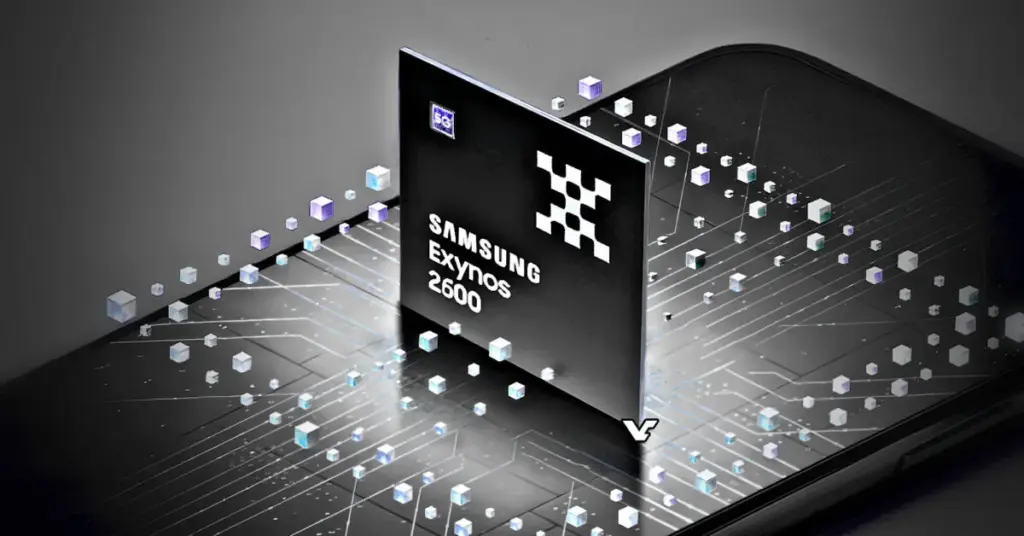
  • Samsung unveil Exynos 2600 performance boost and efficiency improvements on 2nm tech

    Samsung unveil Exynos 2600 performance boost and efficiency improvements on 2nm tech

    Samsung has begun discussing its first 2nm chips in public, and the figures are unexpectedly modest, which is causing some people to take notice. The business plans to begin shipping the new silicon in 2026, beginning with the Galaxy S26 series in Europe. Although the upgrades don’t seem like a “revolution” on paper, they are already helping Samsung earn large contracts and higher expectations.

    Samsung’s worldwide flagship strategy has been weak for years due to its Exynos chips. Customers in Europe have frequently received slower, less effective devices than their Snapdragon-equipped counterparts in the US, and it appears that the S26 and S26+ will follow suit. While the S26 Ultra is expected to continue using Qualcomm’s Snapdragon 8 Elite Gen 5 globally, those two variants are anticipated to employ the Exynos 2600.

    Exynos 2600 performance boost

    Samsung appears confident, though. According to the company’s most recent financial report, the new 2nm Gate-All-Around (GAA) process is expected to improve performance by around 5%, increase efficiency by 8%, and reduce chip size by about 5% when compared to its second-generation 3nm process. Those figures are not that large on their own. However, they are already paying off. Based on early 2nm capabilities, Samsung reportedly acquired about 25% of Galaxy S26 orders and a huge $16.5 billion contract with Tesla for its AI6 CPUs.

    Exynos 2600

    Another aspect of the jigsaw is yield. According to Samsung, the Exynos 2600 is currently achieving a yield rate of over 60%, which is supposedly sufficient to begin significant production. In comparison to employing Snapdragon chips, the company might save $20–$30 per unit if that remains true, which could result in a significant reduction in the bill of materials (BoM) for the European S26 models.

    However, not everyone believes that this is Samsung’s desired return. Exynos has a lengthy history of appearing promising on spec sheets but faltering once the phones are in the hands of consumers. Additionally, there is still a fundamental design gap: Samsung continues to use ARM’s standard Lumex core designs, which typically lag behind in real-world optimization, while Qualcomm and Apple develop highly customized CPU architectures.

    The question is rather straightforward as the Galaxy S26 debut draws near: is Samsung’s early 2nm jump a real turning point or is it just another case of déjà vu for European consumers? It’s obvious that the corporation believes little steps will build up. It’s another matter entirely if consumers concur.

  • OnePlus Ace 6T leaks reveal Snapdragon 8 Gen 5 power and huge 8,000mAh+ battery

    OnePlus Ace 6T leaks reveal Snapdragon 8 Gen 5 power and huge 8,000mAh+ battery

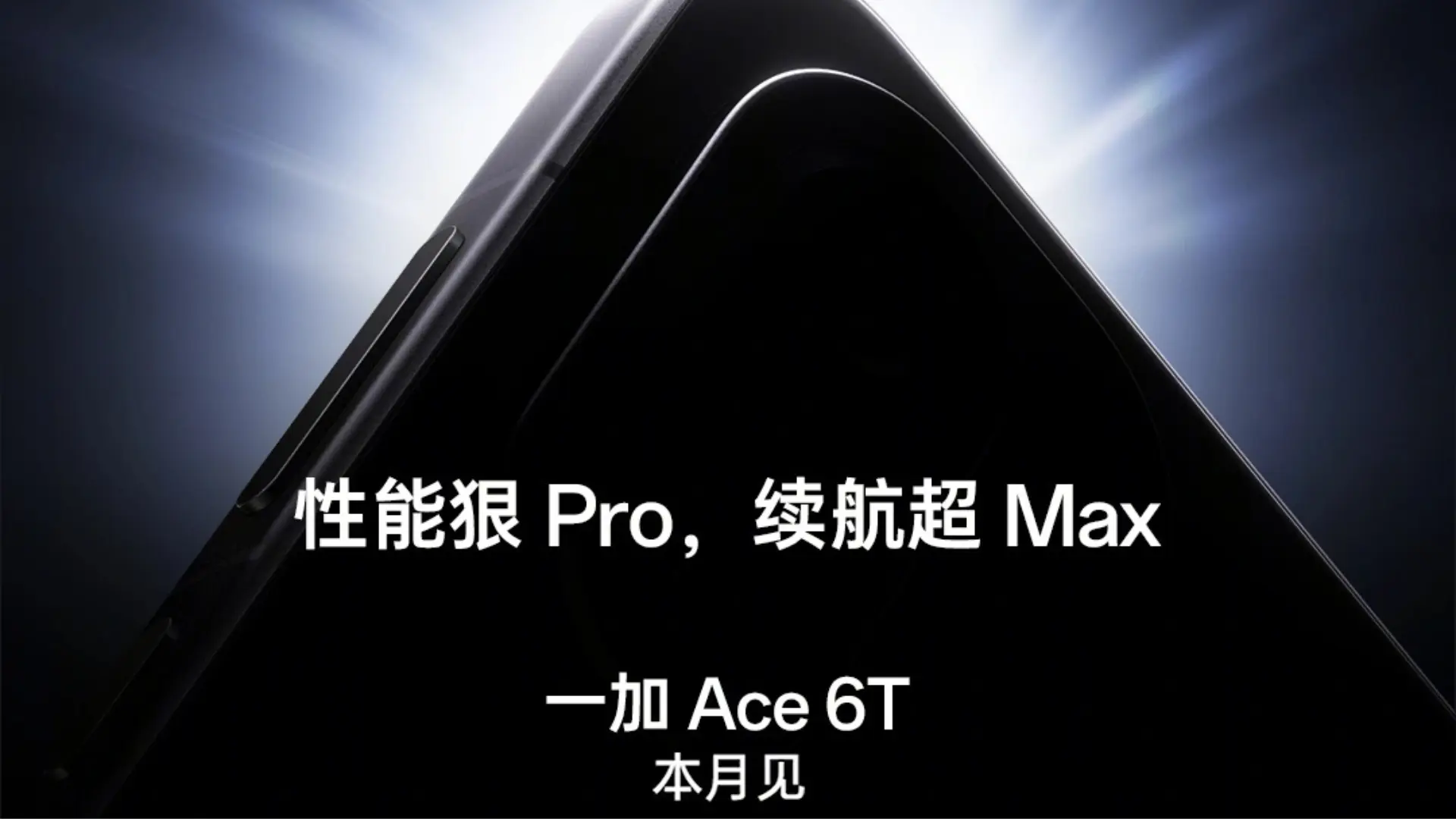
    Pre-orders for the OnePlus Ace 6T are already open as the company prepares to introduce it in China. It is anticipated to make its debut later this month as the first phone to use the upcoming Snapdragon 8 Gen 5 CPU. The device has surfaced on Geekbench ahead of the anticipated debut, disclosing the chipset’s specs. The device’s battery size has also been hinted to by the business.

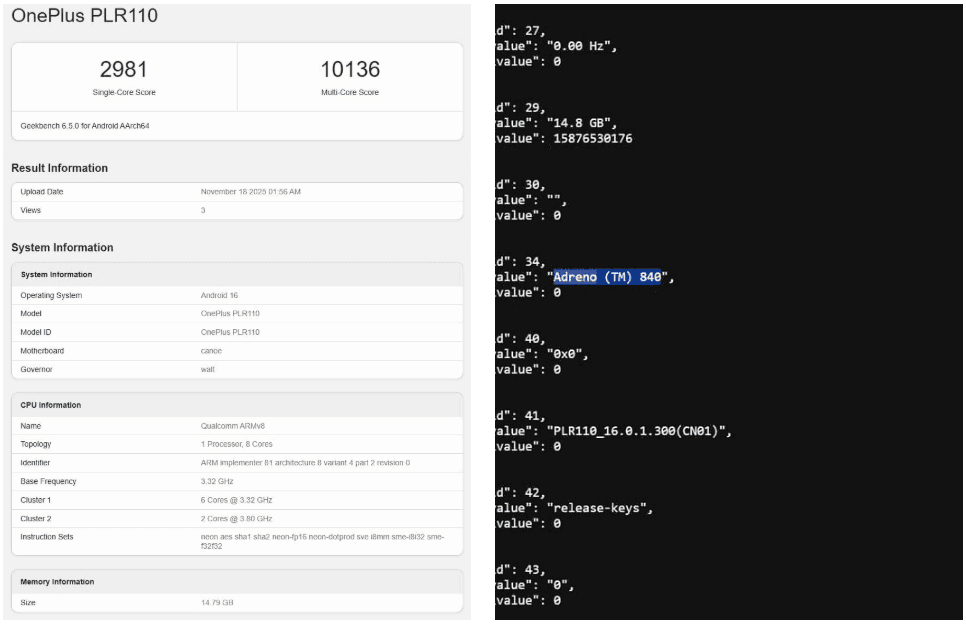
    OnePlus Ace 6T Geekbench score

    According to the listing above, a new Qualcomm CPU powers the next OnePlus PLR110 phone, which looks to be the OnePlus Ace 6T. The SoC has two 3.2GHz cores and six 3.38GHz cores. Additionally, it has an Adreno 840 GPU for graphics. The Snapdragon 8 Gen 5, which is anticipated to make its debut in the coming days, is the subject of these details.

    OnePlus Ace 6T Geekbench listing

    It also boasts 16GB of RAM and Android 16, according to the OnePlus Ace 6T Geekbench listing. It received 10,136 points in the multi-core test and 2,981 points in the single-core test.

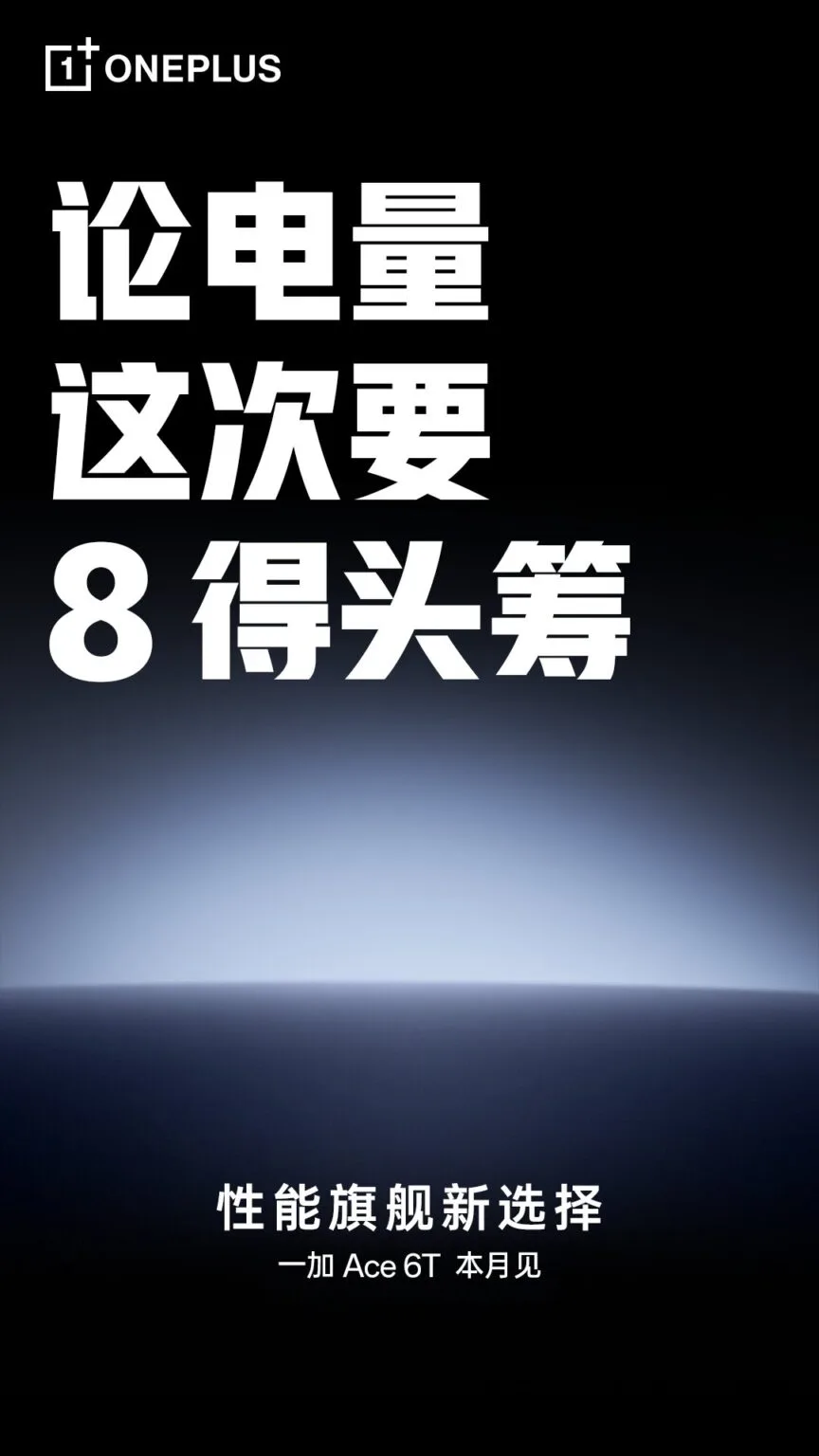
    OnePlus Ace 6T’s battery size teased

    According to the ad above, the OnePlus Ace 6T can support 100W fast charging and has a battery capacity of about 8,000mAh. The gadget includes a 6.8-inch OLED 1.5K 165Hz screen with an ultrasonic in-screen fingerprint sensor, according to some reports. It is anticipated to come with up to 1TB of UFS 4.1 storage and up to 16GB of LPDDR5x Ultra RAM.

    OnePlus Ace 6T hero banner

    An 8-megapixel ultra-wide lens and a 50-megapixel primary camera with OIS assistance will make up its rear camera arrangement. It will sport a 32-megapixel camera on the front for taking selfies. It will come in a variety of colors, including purple, green, black, and a unique variant inspired by Genshin Impact.